


The reality of AI in Australia



Chapter 1: Executive summary
Chapter 2: The reality of AI in Australia
Chapter 3: The opportunities for AI in pharma marketing
Chapter 4: Managing risk in AI adoption
Chapter 5: Preparing for an AI-first future
Chapter 2: The reality of AI in Australia
Artificial intelligence has undergone a rapid shift in perception in Australia over recent years. It has moved away from being viewed as a futuristic or controversial technology to an everyday productivity tool used across many industries.
This shift is now reflected in national data. The National AI Centre (NAIC)’s AI Adoption Tracker indicates that AI use among Australian businesses is accelerating. Data from July–December 2025 shows that 21% of businesses are using AI in a limited capacity, while 5% report broad use across their operations.
This represents a clear increase from January–June 2025, when 16% of businesses reported limited AI use and just 3% reported broad adoption.
At the same time, public attitudes toward AI have matured rather than softened. Australians increasingly hold nuanced views, recognising both the productivity benefits of AI and the risks associated with poor governance, transparency and misuse.
The national conversation has moved away from whether AI should be used, toward how it can be deployed responsibly, particularly in sectors where trust and safety are paramount.
AI in healthcare
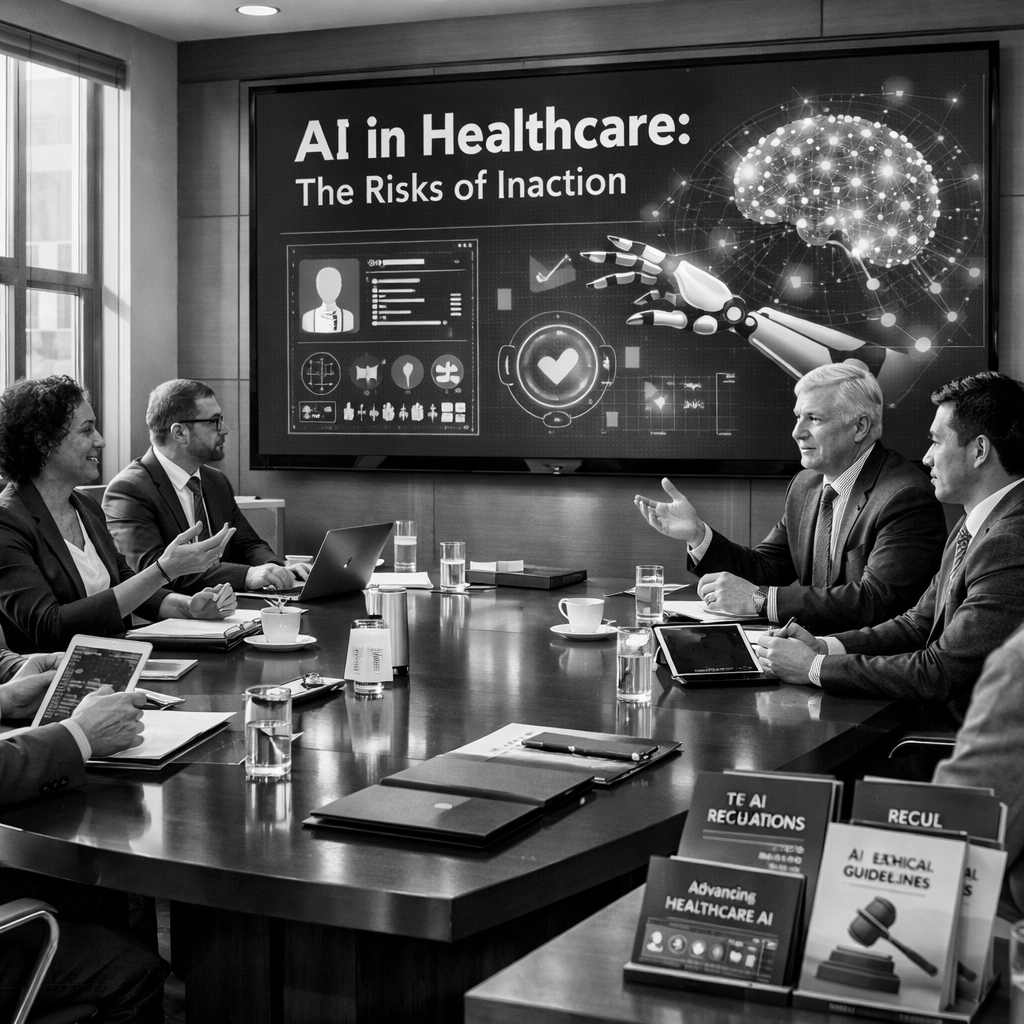
In particular, healthcare has emerged as one of Australia’s leading AI-adopting sectors. According to Deloitte, 75% of leading healthcare providers are experimenting with data and AI solutions. 82% of these providers have already implemented or plan to implement governance and oversight structures for generative AI.
Ultimately, improving patient outcomes is the goal in healthcare, and AI is already having a big impact.
At the October 2025 Next Summit, neurologist Professor Michael Barnett explained how he uses AI for clinical decision support.
“That clinical decision support might be a large language model, or it might be an AI tool that automatically segments new MS lesions on a scan that I would otherwise be unable to see,” he said.
For example, a single MRI can contain thousands of images. Comparing these current and previous scans manually is slow and error-prone. Using an AI tool to compare scans is ideal territory for AI as it can highlight new and enlarging lesions for clinicians to review.
AI is commonly found in doctor’s offices, with AI scribes rising in popularity. Emerging tools like Heidi listen to consults, transcribe them in real time and then turn a consultation into complete clinical notes, allowing doctors to take the next step.
AI is being used to improve diagnostics, communication and treatment options. It can help with rostering, billing, clinical documentation and coding, all helping to improve working conditions for healthcare professionals and ultimately improve patient outcomes.
AI in the pharmaceutical industry
Despite this momentum in healthcare, adoption within the pharmaceutical industry has been slower, particularly in pharmaceutical marketing.
If Matt Britland, Director of Edge Medical Solutions, were to benchmark the Australian industry compared to where it could be, he’d rate it at 4 out of 10.
“There’s a very big aversion. There is a lot of conservatism and there's a lot of a lack of understanding,” he said.
He said people often just try earlier ChatGPT models and when they don’t get the results they want, they think AI doesn’t work.
“I don't think people really understand large language models, AGI (artificial general intelligence) in AI properly.
“But they’re going to have to. It’s going to be as important as the benzene ring and the microprocessor,” Britland said.
Leiha Slaven, Informatics Partner at Roche Products, said most of the focus of the past few years has been getting everyone on the journey.
“I would imagine most pharma companies now are using some form of Copilot, Google Gemini suite, ChatGPT. I think everyone is using it for basic prompting and summarising,” she said.
However, she believes they’re probably still at the tip.
“There's a huge amount of opportunity ahead of us, but how quickly we move is going to be interesting to watch over the next 12 to 18 months,” she said.
In Britland’s experience, Australian pharma is well behind companies in the UK and America.
“You can see that in just drug development and the way that people are leveraging AI for genomics and proteomics and literally designing medicine. So Australia is never going to be anywhere near the US and the UK.”
But he thinks even the pharmaceutical industry in Australia is languishing compared to other industries.
“If you look at how Bunnings Warehouse is using AI or Coles and Woolworths as compared to the pharmaceutical industry, I think they’re way ahead,” he said.
Slaven believes the pharmaceutical industry's enterprise model is one key reason AI integration hasn’t been as swift in this market.
“What we do at an affiliate level is often what gets handed down from our US, European, global head offices. I think what we're trying to do is really limit affiliates from everyone going off and doing their own thing…
“I think that's the risk, as an affiliate. You sit back and wait for what gets handed down to you,” Slaven explained.
Instead of sitting back and waiting, she believes affiliate teams in Australia should advocate for themselves and put themselves forward as a global pilot lab, particularly for AI projects.
“We're small enough to be agile and small enough to be able to implement opportunities quickly. We're strict enough, and we have enough guardrails that we work within the TGA to be safe.
“But for that to happen, we do have to be sitting in the late-night calls and understanding where the AI opportunities are, and then how we put our hand up for those,” she said.
This gap between current adoption and future potential sets the stage for where AI can deliver the most immediate value in pharmaceutical marketing.