


Preparing for an AI-first future in life sciences



Chapter 1: Executive summary
Chapter 2: The reality of AI in Australia
Chapter 3: The opportunities for AI in pharma marketing
Chapter 4: Managing risk in AI adoption
Chapter 5: Preparing for an AI-first future
Chapter 5: Preparing for an AI-first future
The question for pharmaceutical commercial teams is no longer whether AI will matter, but how prepared the organisation is to use it well.
One of the most significant shifts required is conceptual. AI can’t be treated as a standalone digital initiative, innovation pilot or technology rollout. Its value grows when it’s embedded into every aspect.
The implication for marketing teams is clear: AI must be integrated into planning cycles, brand strategy, insight generation and execution, not added after decisions have already been made.
How AI can be reframed
This means reframing AI from a productivity tool to a decision-quality tool. The true return on investment lies in earlier insight, faster iteration and continuous learning, rather than simple time savings.
However, across organisations, the dominant barrier to AI adoption is not technical capability. It is human readiness.
Slaven articulated this imbalance: “It really is 10% the technology, and 90% is the change management.”
Tools are widely available and increasingly standardised. What differs between organisations is whether teams understand AI, trust it and feel motivated to use it.
“Have we really won people's hearts and minds around AI? Do they see the opportunity? Do they feel a renewed sense of purpose in the work that they do because they're using AI to do the bits of their work that they didn't really enjoy doing?” she asked.
For pharmaceutical marketing leaders, this requires active sponsorship rather than passive approval.
“Use the momentum of your champions… your first wave… and then help push along the second wave,” she said.
AI adoption cannot be delegated. Leaders must visibly use AI themselves, role-model curiosity, and reinforce that learning is ongoing rather than finite.
AI literacy must become a baseline capability
In the same way digital literacy became non-negotiable over the past decade, AI literacy is now a foundational skill for modern marketing organisations.
Britland said training is important.
“My advice is to put everybody on a basic AI course that's run through a credible university like Harvard,” he said.
He also advised building competency frameworks with skills related to AI.
“Think about the job descriptions and the people that you're bringing into the organisation to make sure they've got the capabilities,” he continued.
This reflects a broader reality: every marketing role will increasingly involve AI-assisted work, whether in analytics, content development, campaign optimisation or customer engagement.
Slaven said many teams begin their AI journey by accelerating individual tasks (drafting content faster, summarising research, or generating ideas). While useful, this represents only a fraction of AI’s potential value.
She said the next step in rethinking workflows entirely: “If I’ve got someone doing seven steps in seven spreadsheets… we need to look at how we innovate that process end to end.”
For marketing teams, success should be measured not only by hours saved, but by how that time is reinvested, whether into strategy, coaching, learning, and customer engagement.
Bonjean noted, “AI is not just another digital cost centre. It is a strategic multiplier that enables teams to see what is happening now, act intelligently and evolve faster than competitors.”
The urgency of acting now
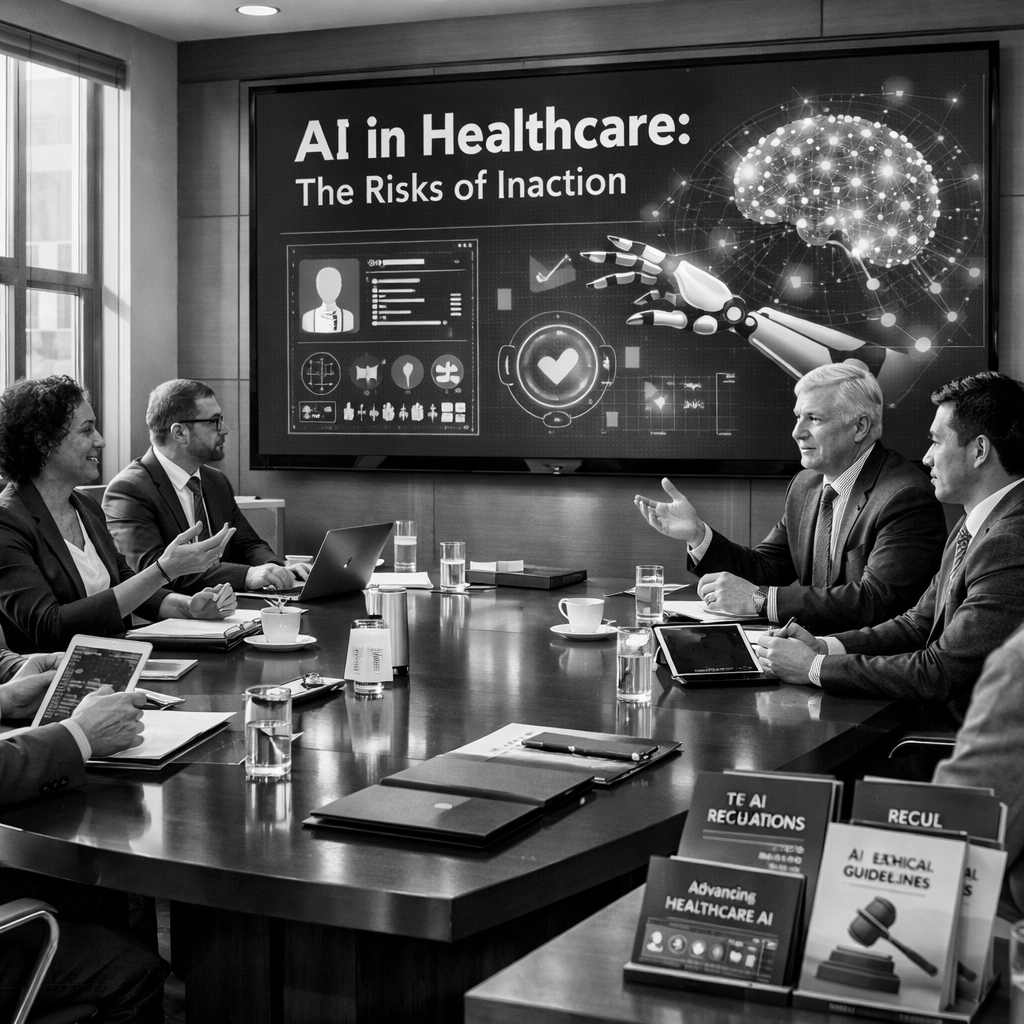
AI adoption across healthcare and life sciences is accelerating faster than regulatory frameworks and organisational habits can adapt. That gap creates understandable caution, but it also exposes a growing risk of inaction. As Britland acknowledged, clearer guidance is needed.
“We need better FDA guidelines. Better TGA guidelines, better guidelines from Medicines Australia. We need to put guardrails in place,” he said.
Stronger, more consistent frameworks will be essential to ensure AI is used safely, ethically and in ways that protect patients and public trust. Yet the absence of perfect certainty should not become a reason to stand still. The pace and scale of change underway suggest that waiting carries its own strategic cost.
“This is mind-bending, how it’s going to change things… and people still think it’s a fad,” Britland observed.
History shows that organisations that delay engaging with transformative technologies rarely shape how those technologies are applied; instead, they are forced to react to decisions made by others.
The potential upside is significant. Used responsibly, AI can improve access to care, close gaps between evidence and practice, and support earlier intervention.
“If we have better accessibility to something like an AI, then in all probability, people are going to be diagnosed sooner,” Rollsy said. “Every health issue is better addressed when it’s sooner addressed.”
The challenge for healthcare and life sciences is no longer whether AI will change the system, but whether the sector moves quickly enough (within clear guardrails) to ensure that change delivers safer, more equitable and more effective care.