


Compliance Teams Lead Pharma’s AI Transformation | RoseRx



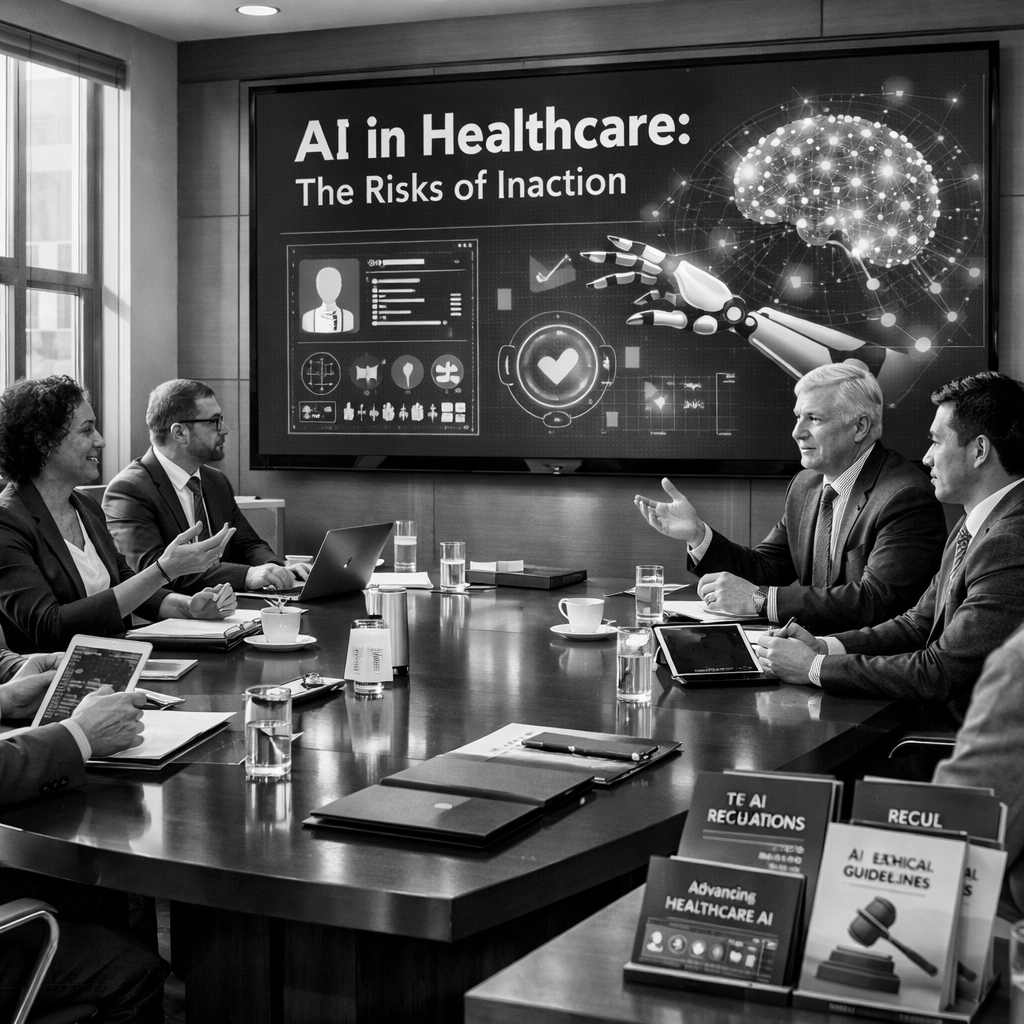
Pharmaceutical compliance teams are emerging as the unexpected leaders driving the safe and rapid adoption of artificial intelligence across the sector, transforming how companies use the latest digital tools to engage with patients and healthcare professionals.
Regional Counsel for CANZ at iNova Pharmaceuticals, Ron Eames, says compliance is now a critical enabler of innovation and trust.
“Compliance is no longer seen as a blocker, it’s a built-in feature that underpins responsible AI,” Eames said, adding the Singapore-based, private equity-owned iNova was witnessing a fundamental cultural shift in how its business operated and deployed awareness and engagement campaigns in multiple international markets.
“Compliance professionals, once seen as gatekeepers, are now driving digital acceleration by working with technology teams to embed transparency, auditability, and safety mechanisms directly into AI systems. The stereotype that compliance kills innovation is outdated,” Eames said.
“We now operate on a compliance-by-design model, where responsible AI is built in from the start rather than bolted on at the end. With the speed of advancement, AI workflows in enterprise feel inevitable. The real differentiator and competitive advantage will go to the companies that build it responsibly.”
Eames said trust remains one of the largest barriers to AI adoption in healthcare, and that transparency and safety are paramount.
“Compliance teams are advocating for verified and substantiated sources incorporated into ‘retrieval-augmented generation” systems to ground AI outputs and reduce hallucination. We are seeing far more scrutiny and demand for explainability in Agentic AI systems to enable assessment and transparency of decision making to reduce misalignment. As AI evolves from a black box into an explainable system, trust will grow alongside it,” he said.
He added that AI adoption across the business was also reshaping project timelines.
“Traditional pharmaceutical IT deployments that once took nine to twelve months are now being completed in under 90 days, without reducing regulatory scrutiny,” he said.
A recent deployment was completed within four weeks. “This wasn’t about skipping safety checks. It worked because compliance, legal, medical and tech teams collaborated from day one into the design of the tool. Each stakeholder assessed potential risks early; privacy, regulatory, consumer protection, etc, ensuring speed was matched by functional accountability."
Eames said the real test of responsible AI is whether it enhances engagement safety.“AI may accelerate processes, but our regulatory and medical obligations remain unchanged.”
Eames said iNova had been quick to recognise how properly built agentic AI engagement systems can deliver hyper-personalised, compliant and accurate responses at scale, addressing the long-standing problem of impersonal or unverified digital experiences that expose patients to misinformation.
“To be able to personalise patient and healthcare provider information at scale is transformative for our business and our customers,” he said.
Eames welcomed evolving international frameworks such as the EU AI Act and Australia’s developing AI safety standards.
“Regulation isn’t a threat; it’s validation. Companies that understand how to safely and responsibly deploy AI will lead the next phase of pharma growth,” he said.
Frequently asked questions
How are compliance teams influencing AI adoption in pharmaceutical companies?
Compliance teams are key gatekeepers of AI adoption in pharma, any AI-driven communication must meet strict MLR approval standards, privacy regulations, and promotional guidelines.
RoseRx addresses this by building compliance in from the ground up, with content indexed against MLR-approved materials and guardrails set at deployment. This means the AI only ever operates within approved boundaries, turning compliance from a blocker into a launchpad for confident, scalable engagement.
Why is AI-driven hyper-personalisation risky without strong compliance oversight?
Without compliance oversight, AI-driven hyper-personalization can easily cross into off-label promotion, unapproved claims, or communications that vary so far from MLR-approved content that they create serious regulatory and legal exposure. The more personalised the output, the harder it is to manually review every variation at scale.
RoseRx mitigates this by anchoring all AI-generated content to MLR-approved materials so personalization operates within a compliant framework, not outside it. The AI tailors timing, channel, and relevance, but never the approved clinical content itself. That distinction is what makes hyper-personalisation safe to scale in pharma.
What benefits does compliance-led AI bring to pharma operations?
Compliance-led AI gives pharma brands the confidence to scale fast without regulatory risk. The key benefits include faster deployment (no manual review of every interaction because guardrails are set upfront), reduced legal exposure, consistent on-label messaging across every channel and market, and the ability to move at the speed AI enables without sacrificing control.
For RoseRx, compliance-led AI also unlocks trust with HCPs when clinicians know every interaction is accurate, approved, and relevant, engagement quality improves. The result is an operation that is simultaneously faster, safer, and more effective than traditional manually-reviewed communication workflows.
Make AI transparency and safety your competitive edge
Healthcare needs personal, relevant, digital experiences. We built the platform to make it happen.