



From awareness to action: How RoseRx helps patients find the right care, faster


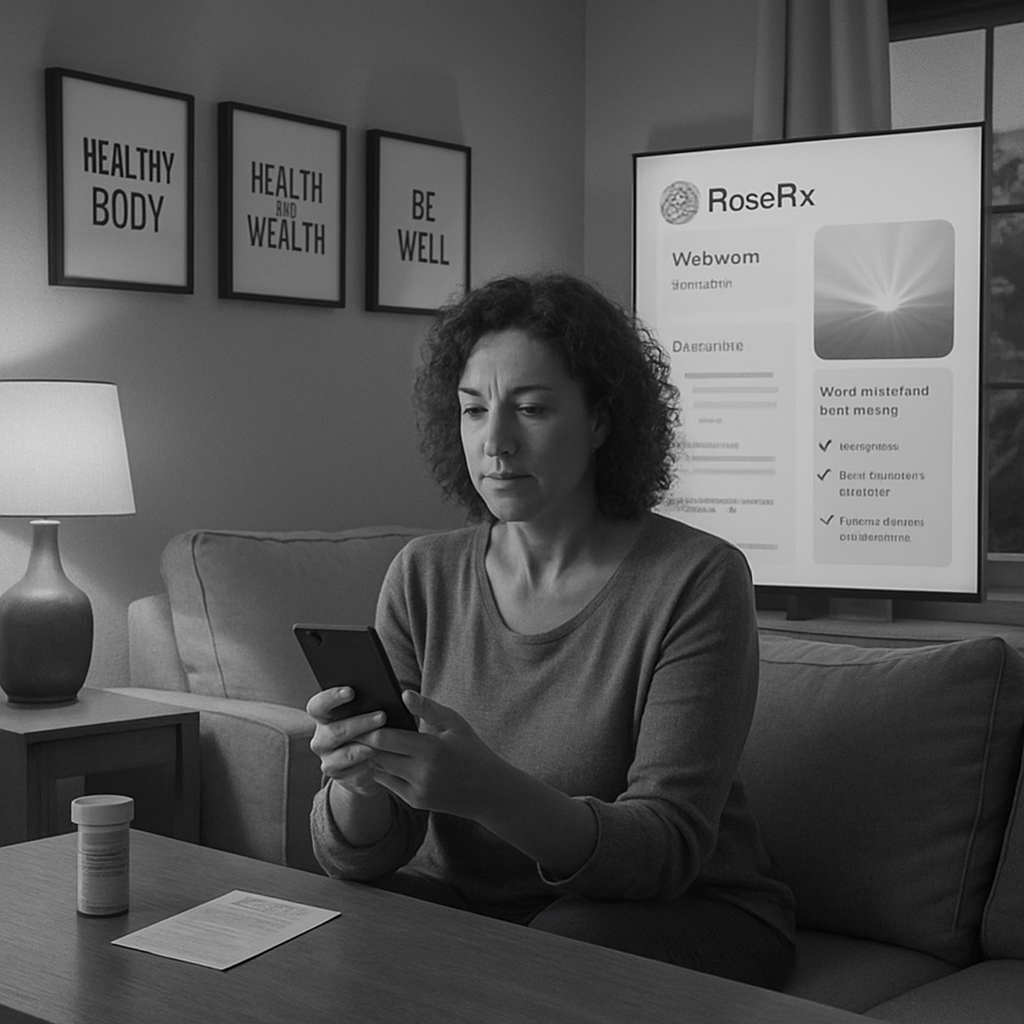
Every healthcare journey begins with awareness. A symptom appears. A diagnosis is made. A treatment is prescribed. But between awareness and action between knowing what you should do and actually doing it, lies a gap that costs patients time, outcomes, and peace of mind.
This is where anxiety lives. Where questions go unanswered. Where patients delay starting treatment because they're not sure if they're doing it right. And in healthcare, delays aren't just inconvenient, they can be dangerous.
The awareness to action-gap
Consider a patient who's just been prescribed a new treatment for a chronic skin condition. They leave the dermatologist's office with a prescription, a brief explanation and maybe a printed sheet. They're aware they need to start treatment. But when they get home, questions emerge:
Do I apply this before or after moisturizer?
What if I miss a dose?
Is this redness normal or should I call the doctor?
It's 8pm on a Tuesday. The clinic is closed. The information sheet doesn't address their specific question. Google provides ten conflicting answers. So they wait. And worry. And sometimes, they don't start treatment at all.
This is the awareness-to-action gap. And it's costing healthcare systems billions in delayed care, unnecessary emergency visits and poor adherence.
Why traditional patient support falls short
Healthcare providers know this gap exists. That's why patient support programs were created. But traditional patient support in digital health struggles to close it effectively:
Call centers require patients to wait on hold during business hours when most people are at work. Printed materials can't answer specific, contextual questions. Nurse navigators are invaluable but expensive, limiting availability to only high-cost therapies. Generic websites provide information but not personalized guidance.
The gap persists because traditional approaches weren't designed for the way people actually need help: immediately, personally, and on their terms.
Enter AI-driven patient engagement
A digital health engagement platform powered by AI fundamentally changes the equation. RoseRx bridges the awareness-to-action gap by meeting patients exactly where they are at home, at the moment of uncertainty, with the specific question only they would ask.
Immediate access, 24/7
When a patient has a question at 11pm, they don't need to wait until morning. AI-driven patient engagement means support is available the moment uncertainty strikes—when patients are most likely to delay or abandon treatment.
Personalized to each patient's journey
Unlike generic information, AI understands context. It knows which medication the patient is taking, where they are in their treatment journey, and what questions are most relevant. A patient starting therapy gets different guidance than someone six months in managing side effects.
Consistent with clinical guidance
The benefits of AI-driven patient engagement include maintaining clinical accuracy at scale. Every response aligns with what the prescribing physician would say, providing patients with confidence without consuming clinician time.
Reduces friction to starting treatment
The faster patients get answers, the faster they move from awareness to action. Speed isn't just convenient—it's clinically significant. Early treatment adherence predicts long-term outcomes across virtually every therapeutic area.
Real-world impact: measurable outcomes
The benefits of AI-driven patient engagement extend beyond patient satisfaction:
Faster time-to-first-dose: When patients have immediate access to answers, they start treatment sooner. The anxiety-driven delay between picking up a prescription and actually using it shrinks dramatically.
Higher treatment initiation rates: Prescribers report that patients are more likely to start therapy when they know support is available. The prescription doesn't sit in a drawer.
Reduced support call volume: Medical information teams see fewer routine questions, allowing them to focus on complex cases that truly require human expertise.
Improved prescriber confidence: Physicians are more comfortable prescribing when they know patients have access to reliable, always-on guidance.
Why speed matters in healthcare
In most industries, convenience is nice to have. In healthcare, speed saves lives and improves outcomes.
Every day a patient delays starting treatment is a day their condition progresses. Every unanswered question is a barrier to adherence. Every anxious moment searching for information is an opportunity for misinformation to take root.
A digital health engagement platform that accelerates the move from awareness to action doesn't just improve patient experience, it improves clinical outcomes. Patients who start treatment promptly and adhere consistently get better results.
The future of patient support
Traditional patient support in digital health focused on managing patients already on therapy. The next generation focuses on eliminating barriers before they delay care.
RoseRx represents this shift: from reactive support to proactive enablement. From answering questions after problems arise to preventing problems by anticipating patient needs.
The awareness-to-action gap isn't a patient problem or a provider problem. It's a system problem that requires a system solution. AI-driven patient engagement provides that solution, meeting patients where they are, when they need help, with answers that move them forward.
Moving forward
Patients want to take action. They want to start treatment, follow instructions, and get better. What they need is confidence that they're doing it right and support when uncertainty strikes.
The benefits of AI-driven patient engagement are clear: faster access to care, better adherence, improved outcomes, and reduced burden on healthcare providers. But perhaps the most important benefit is peace of mind.
When patients know help is available the moment they need it, awareness becomes action. Questions become confidence. And prescriptions become outcomes.
That's not just better patient support. That's better healthcare.
Frequently asked questions
How do patient engagement platforms help patients find care?
Patient engagement platforms bridge the gap between diagnosis and action by providing immediate, personalized support when patients need it most. A digital health engagement platform like RoseRx gives patients 24/7 access to accurate information about their prescribed treatments. When a patient has a question at 8pm about starting medication, they get answers immediately no waiting until the next business day. This helps patients move from awareness to action faster, with confidence.
Why do patients struggle to take action after diagnosis?
Patients leave their doctor's office with prescriptions but questions emerge only when they're home: How do I take this? What side effects are normal? Can I take this with my other medications? Traditional patient support, printed brochures, clinic phone lines, generic websites can't provide immediate, personalized answers. This creates anxiety and delays. Many patients postpone starting treatment not because they don't want to get better, but because they lack confidence they're doing it right. Without immediate access to reliable guidance, the gap between knowing what to do and doing it can stretch from days to weeks.
How does RoseRx support patient engagement?
RoseRx delivers AI-driven patient engagement that meets patients exactly where they are. Patients access RoseRx through a QR code on their medication packaging and connect with an AI assistant that answers their specific questions in real-time. Unlike generic health information, RoseRx provides personalized guidance consistent with what their physician would say. Available 24/7, it adapts responses based on where patients are in their treatment journey newly diagnosed patients get different support than those managing long-term therapy. This helps patients start treatment faster and adhere more consistently.
Can patient engagement platforms reduce delays in care?
Yes. The benefits of AI-driven patient engagement include eliminating common barriers that delay treatment initiation. When patients have immediate answers, the anxiety-driven postponement between picking up a prescription and starting treatment shrinks dramatically. A digital health engagement platform like RoseRx reduces delays by providing instant answers 24/7, building patient confidence before they start treatment, and eliminating wait times. Prescribers report patients are more likely to initiate therapy when they know support is available, further reducing time between prescription and first dose.
How does RoseRx ensure accurate and credible patient information?
RoseRx is trained specifically on approved product information and clinical guidelines, not generic internet content. Every response aligns with what the prescribing physician would say. Medical affairs teams and prescribers validate responses before deployment to ensure they meet regulatory standards and clinical best practices. Unlike Google searches or general AI chatbots, RoseRx provides guidance specific to the patient's prescribed medication. When questions require clinical judgment, it directs patients to their healthcare provider. This ensures credible patient support in digital health that extends prescriber care without compromising accuracy.